Colombia in 9 days

Colombia: Coffee Valleys, Colourful Streets and Caribbean Charm
Colombia is one of South America's most diverse destinations. From the lush coffee plantations of the Andes to vibrant cities and Caribbean colonial towns, the country offers an enormous variety of landscapes, cultures and experiences.
This 9-day itinerary combines three of Colombia's most popular regions: the Coffee Region (Eje Cafetero), known for its spectacular mountain scenery and world-famous coffee production; Medellín, a city renowned for its remarkable transformation and cultural revival; and Cartagena, Colombia's iconic Caribbean port city with its colourful colonial architecture and nearby tropical islands.
The route is ideal for first-time visitors looking to experience some of the country's most famous highlights, including the towering wax palms of the Valle de Cocora, traditional coffee farms, the vibrant streets of Comuna 13, the colourful town of Guatapé and Cartagena's historic walled city.
In this guide, I share my complete itinerary, practical travel tips, recommended timings and everything I learned from exploring Colombia over nine days.
Itinerary
Day 1: Travel to Colombia
Day 2: Valle de Cocora & Salento
Day 3: Filandia & Flight to Medellín
Day 4: Medellín & Guatapé
Day 5: Medellín
Day 6: Cartagena Historic Centre
Day 7: Castillo San Felipe & Getsemaní
Day 8: Rosario Islands
Day 9: Cartagena & Journey Home
Best Time to Visit Colombia
One thing many first-time visitors don't realise is how varied Colombia's climate is. During a single trip, you can experience cool mountain mornings, pleasant spring-like temperatures and tropical Caribbean heat.For a similar itinerary, I would recommend visiting during either:
December to March, which generally offers drier weather and is an ideal time for hiking in the Coffee Region and exploring most parts of the country.
July to August, another relatively dry period that offers comfortable weather conditions for visiting multiple regions of Colombia within the same trip.
We visited in May and, while the weather in Eje Cafetero and Medellín was excellent, Cartagena was extremely hot and humid. At times, it genuinely felt difficult to do anything during the middle of the day.
Useful Travel Tips
You don't need that much time in Cartagena – If I were planning this trip again, I would allocate less time to Cartagena and try to explore another part of the country instead. I would have liked to visit Tayrona National Park or the Minca area, even though this would have required an additional domestic flight. Alternatively, I would consider spending a full day in Bogotá.
Prepare for Domestic Flights – Colombia is larger than many people expect. Flying between destinations is often unavoidable, so make sure to factor this into your itinerary. We found the airports easy to navigate and generally very efficient.
Pack for Different Climates – Medellín can feel surprisingly cool in the evenings, while Cartagena can be extremely hot and humid.
Manage Expectations – Some destinations, particularly Guatapé and Cartagena, have become social media favourites. They are certainly beautiful places, but I found some aspects less impressive in reality than online, particularly given the amount of attention visitors often receive from street vendors and tour operators.
Day 1: Travel to Colombia
Getting to Colombia involved a fairly long journey from London via Madrid before eventually arriving in Bogotá during the early hours of the morning. After a few hours at the airport, we connected to Pereira, the gateway to Colombia's Coffee Region.
One thing I would recommend is upgrading your domestic flight to business class if a reasonable offer becomes available. You can often book economy and then receive upgrade offers shortly before departure. For us, it was completely worth it because it allowed us to spend some time in the Avianca lounge resting, relaxing and even having a shower before our next flight.
At Pereira Airport, we rented a car to explore the region. At least in this area, I found driving very easy. While the roads can be winding, they were generally well maintained and drivers were relatively respectful. The drive from the airport to our hotel took around one hour.
It is important to note that there are toll roads in the region, which must be paid for in cash. The toll price was COP$22,000.
In the Coffee Region, we stayed at the excellent Bio Habitat Hotel, Aken Soul Collection, which I would highly recommend. Set in the middle of nature, it offered beautiful surroundings and excellent service.


Day 2: Valle de Cocora & Salento
This was easily one of my favourite days of the trip.
After breakfast, we headed to Valle de Cocora, approximately a 50-minute drive from our hotel. The entrance fee was COP$30,000 per person.
When it comes to parking, there are plenty of options along the road leading into the valley. However, I would recommend driving almost all the way to the end and using the final parking area, as it offers the most convenient access to the main trails.
We spent the morning hiking through the spectacular Valle de Cocora, home to Colombia's iconic wax palms. The scenery was breathtaking. Towering palms rise dramatically above the mist-covered valley floor, creating one of the most distinctive landscapes I have seen anywhere in the world.
There are several ways to experience the valley depending on the amount of time and energy you have available.
Many visitors opt for the shorter Bosque de Palmas walk, which takes around one to two hours and covers approximately 2 to 4 kilometres. This relatively easy route follows the main unpaved road into the heart of the wax palm forest before returning the same way.
For those seeking a more immersive experience, the full loop hike is highly recommended. Covering approximately 10 to 12 kilometres and taking between four and six hours, this moderate-to-challenging trek passes through cloud forest, suspension bridges and the famous Acaime hummingbird reserve before eventually reaching the valley's most iconic wax palm viewpoints.
We chose a combination of the two routes, starting on the red trail and returning via the blue trail while continuing all the way to the viewpoints. The panoramic views over the valley were absolutely worth the effort. It took us around three hours in total.
Afterwards, we headed to Salento for lunch and a walk. We wandered through the colourful streets, climbed to the viewpoints overlooking the valley and enjoyed some excellent coffee. Salento is undoubtedly touristy, but it still manages to retain plenty of charm.
In the afternoon, we joined a coffee tour at Finca Don Elias, a small coffee farm near Salento. Finding somewhere relatively authentic and not overly touristy wasn't easy, but this turned out to be an excellent choice.
A few things worth noting:
Even if you book online, payment must be made on arrival and in cash.
Reaching the farm by car can be challenging due to the unpaved road. It is much easier to use their transport service from Salento.
There were a lot of mosquitoes, so make sure you bring and apply plenty of insect repellent.
Learning how coffee is grown, harvested and processed was genuinely fascinating and gave us a much greater appreciation for the amount of work involved in producing it.


Day 3: Filandia & Flight to Medellín
On our final day in the Coffee Region, we took things slowly.
Before breakfast, we explored the hotel grounds and then headed towards Filandia after checking out. The town was only around a 30-minute drive away.
If Salento is the Coffee Region's star attraction, Filandia is its quieter and more understated neighbour. To my surprise, Filandia ended up being one of my favourite places in Colombia. The colourful architecture, peaceful streets and stunning mountain views felt much more authentic than many of the country's larger tourist destinations.
After visiting Filandia, we drove to Pereira Airport and flew to Medellín.
To get from Medellín Airport to the city centre, we took an Uber. We found Uber to be by far the easiest and most convenient way to get around the city.
For accommodation, I would recommend staying in El Poblado. While Medellín has some areas where visitors need to be more cautious, El Poblado feels safe, walkable and offers a huge variety of restaurants, bars and hotels.
We stayed at The Click Clack Hotel Medellín, which I would recommend. One useful tip is to check room sizes carefully before booking, as hotel rooms in Medellín can sometimes be surprisingly small.


Day 4: Medellín & Guatapé
On our first full day in Medellín, we decided to take a day trip to Guatapé.
We booked this excursion through GetYourGuide and chose a private tour for our family, which included hotel pick-up and drop-off. The total cost for three people was £230.
One important tip is to try to do this trip on a weekday. Traffic can be extremely heavy at weekends, especially on Sundays, particularly on the return journey to Medellín. In addition, Guatapé is a popular destination for locals, so it tends to be much busier at weekends.
The tour included three main stops:
La Piedra del Peñol
El Peñol Boat Tour
Guatapé
La Piedra del Peñol
A massive 65-million-year-old granite monolith that towers more than 220 metres above the surrounding man-made reservoir.
I have mixed feelings about this attraction. The area around the rock itself is not particularly attractive, as it is packed with tourist shops selling all kinds of souvenirs. However, once you reach the top, the views are absolutely stunning. The panoramic scenery over the reservoir and the surrounding islands is truly breathtaking.
So, is it worth making the climb? In my opinion, yes, absolutely. Just manage your expectations regarding the commercialised atmosphere at the base of the rock before you arrive.
El Peñol Boat Tour
After visiting La Piedra del Peñol, we joined our guide for a private boat tour around the reservoir. I thought this was a fantastic experience and one of the highlights of the day.
I would recommend asking your guide for advice on the best time to do the boat tour, as the weather can be quite unpredictable. It is usually better to be flexible and let them suggest the most suitable time based on the conditions that day.
Guatapé
After finishing the boat tour, we took a walk around Guatapé, where our guide showed us around the town and explained its fascinating history. The town underwent a dramatic transformation in the 1970s when the Colombian government flooded a large portion of the valley to create the Peñol-Guatapé hydroelectric reservoir.
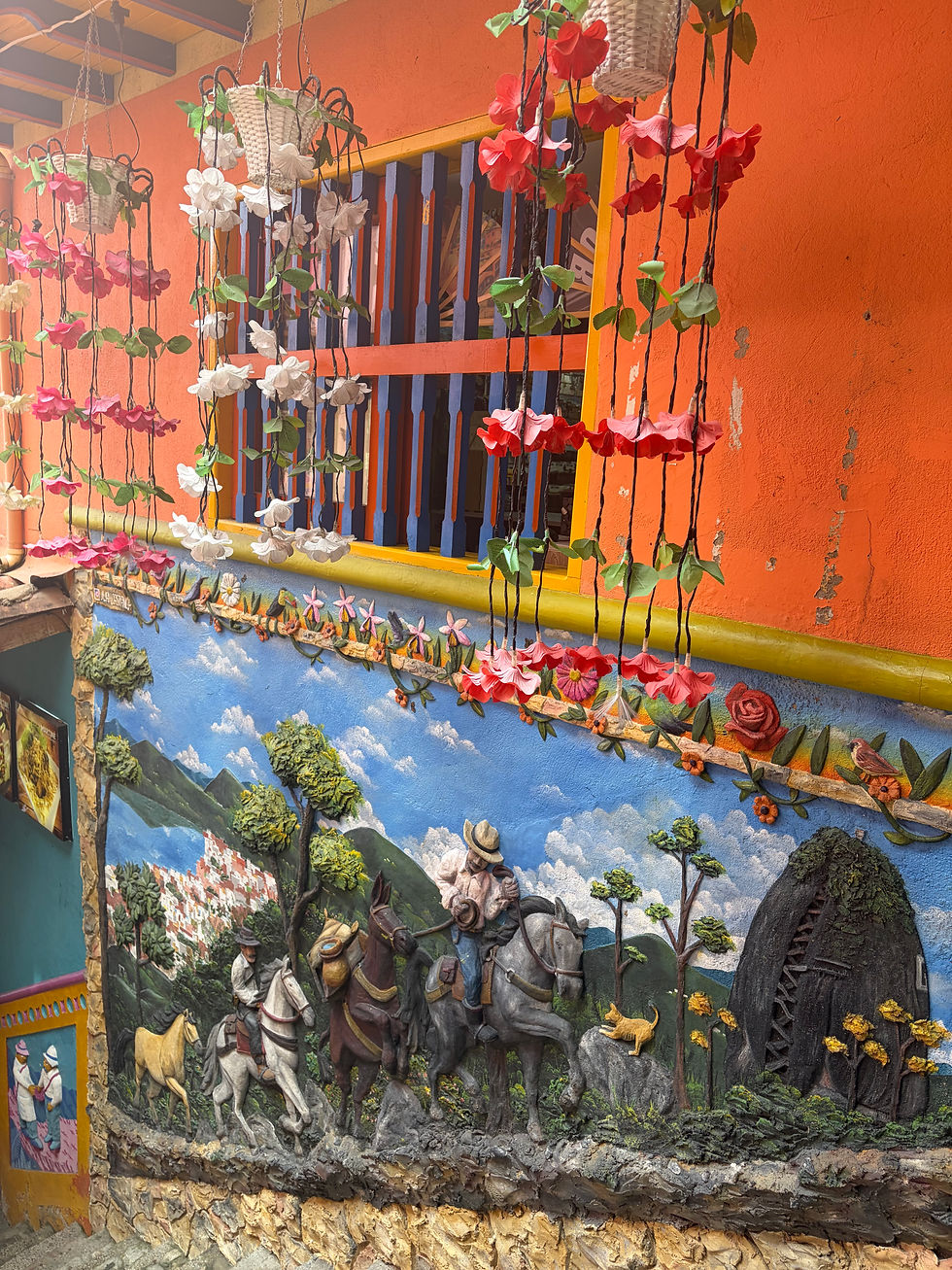
While this project submerged the original town of El Peñol, it transformed Guatapé into a thriving lakeside destination and inspired its famous tradition of zócalos - beautifully carved and brightly coloured decorative panels that adorn the lower walls of homes and buildings.
Originally, these unique bas-reliefs depicted scenes of daily life, local culture and the town's history, effectively turning Guatapé into an open-air art gallery. I absolutely loved this part of the visit.
When we returned to Medellín, we had dinner at Mamasita, which was excellent. I would particularly recommend ordering the Arepas Fiesta and the Pollo al Carbón.




Day 5: Medellín
The following day was dedicated to exploring Medellín.
Our first stop was Comuna 13, one of the city's most famous neighbourhoods. Once known for violence and instability, it has reinvented itself as a vibrant destination filled with colourful murals, street performers and local businesses.
I would recommend arriving early in the morning so you can explore before the crowds arrive. While I think everyone visiting Medellín should see Comuna 13, simply because the murals are incredibly impressive, it is also one of those places that can feel a little like a tourist trap, with many shops focused on selling souvenirs to visitors. For that reason, I would suggest a relatively short visit: admire the artwork, learn about the area's remarkable transformation and then continue exploring other parts of the city.
Afterwards, we took an Uber to Plaza Botero and the Museo de Antioquia.
Plaza Botero and the adjacent Museo de Antioquia represent the cultural heart of Medellín and tell a remarkable story of urban renewal. Originally founded in 1881 as the Zea Museum, the institution underwent a major transformation in 2000 when Medellín-born artist Fernando Botero led an ambitious cultural revitalisation project. He donated more than 100 pieces of his own work, alongside a collection of historical artefacts, helping to establish the museum as one of Colombia's most important cultural institutions.
The museum is housed in the beautifully restored former Municipal Palace, an impressive Art Deco building overlooking the plaza.
I absolutely loved this area. Both the plaza and the museum were fantastic, and I think they are well worth a visit. However, we were advised not to wander beyond the immediate vicinity of the square, as some of the surrounding streets can be unsafe. For that reason, I would recommend taking Uber directly to and from Plaza Botero rather than exploring the area on foot.
Another place I would recommend visiting, if you have the time, is the Botanical Garden of Medellín. Just keep in mind that it is closed on Mondays.
For lunch, we returned to El Poblado and headed to Provenza, which offers plenty of options for a casual meal, with numerous restaurants and terraces where you can relax and soak up the atmosphere.
We then spent the afternoon by the pool before heading out for dinner at Krudo Viches & Vinilos.
For a drink go to “La Casa De Ruby”.


Day 6: Cartagena Historic Centre
After another short flight, we arrived in Cartagena, Colombia's most famous colonial city.
Here, we decided to stay in a five-star boutique hotel and, unfortunately, it turned out to be a mistake. The service fell well below our expectations and detracted from the overall experience.
If I were to return, I would probably stay at one of the more established luxury hotels. The Sofitel Legend Santa Clara Cartagena and the Bastión Luxury Hotel both look like excellent options.
There are a couple of things worth mentioning about Cartagena:
Two nights in the city is enough. We stayed longer, and in hindsight I do not think the extra time was necessary.
Street vendors and tour operators can be very persistent. We quickly realised that sitting on outdoor terraces often meant frequent interruptions, making it difficult to have a conversation. This was probably the aspect of the trip we enjoyed the least.
That said, Cartagena is undeniably beautiful. It is one of the most stunning historic centres I have ever visited. The city is incredibly well preserved, and walking through its colourful streets often felt surreal. It is also worth noting that Cartagena is where we had some of the best food of the entire trip.
After checking in, we headed for lunch at Buena Vida Marisquería, which we loved. It offered a relaxed atmosphere, reasonable prices and excellent seafood.
After lunch, we spent the afternoon exploring the historic centre, wandering through its colourful streets, picturesque plazas and beautifully preserved colonial architecture. Cartagena is one of the most photogenic cities I have visited. The narrow cobbled streets, flower-filled balconies and vibrant façades make it feel like a living postcard.
We stopped at several of the city's main attractions, including:
Plaza de los Coches
Plaza de la Aduana
Cartagena Cathedral
Plaza Santo Domingo
The historic centre is full of charming cafés, boutiques and restaurants, and there always seems to be something happening around every corner.
For dinner, we went to Restaurante Don Juan, which was excellent. It was surprisingly quiet on the evening we visited, but the food was outstanding.
For drinks afterwards, I would recommend Alquímico, one of Cartagena's most popular cocktail bars.


Day 7: Castillo San Felipe & Getsemaní
The next day was dedicated to exploring two of Cartagena's most famous attractions: Castillo San Felipe de Barajas and Getsemaní.
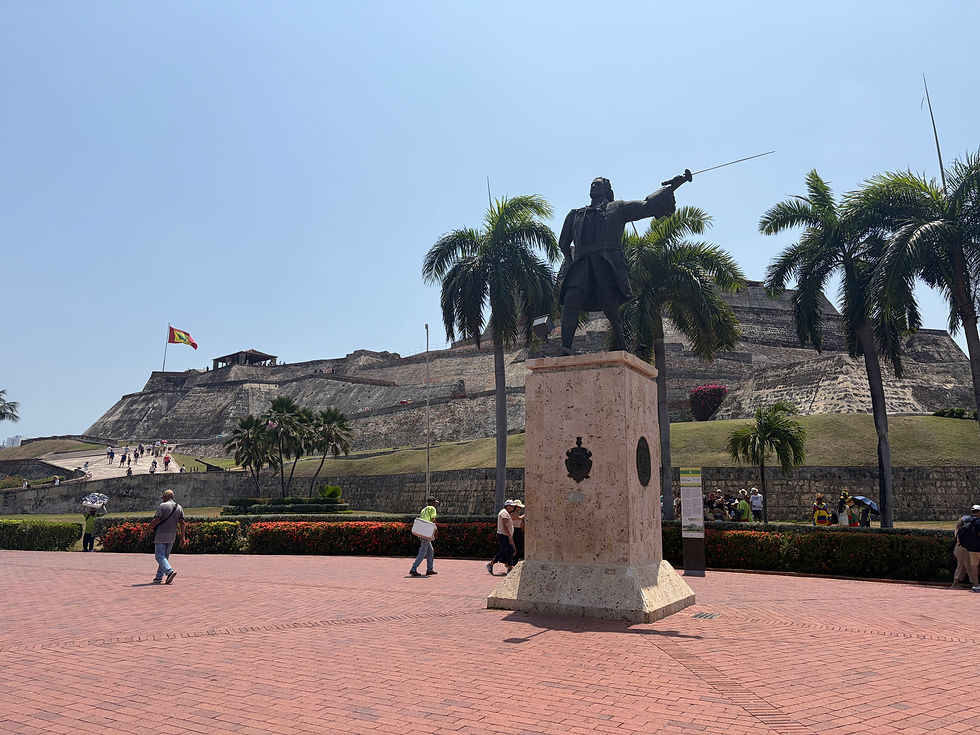
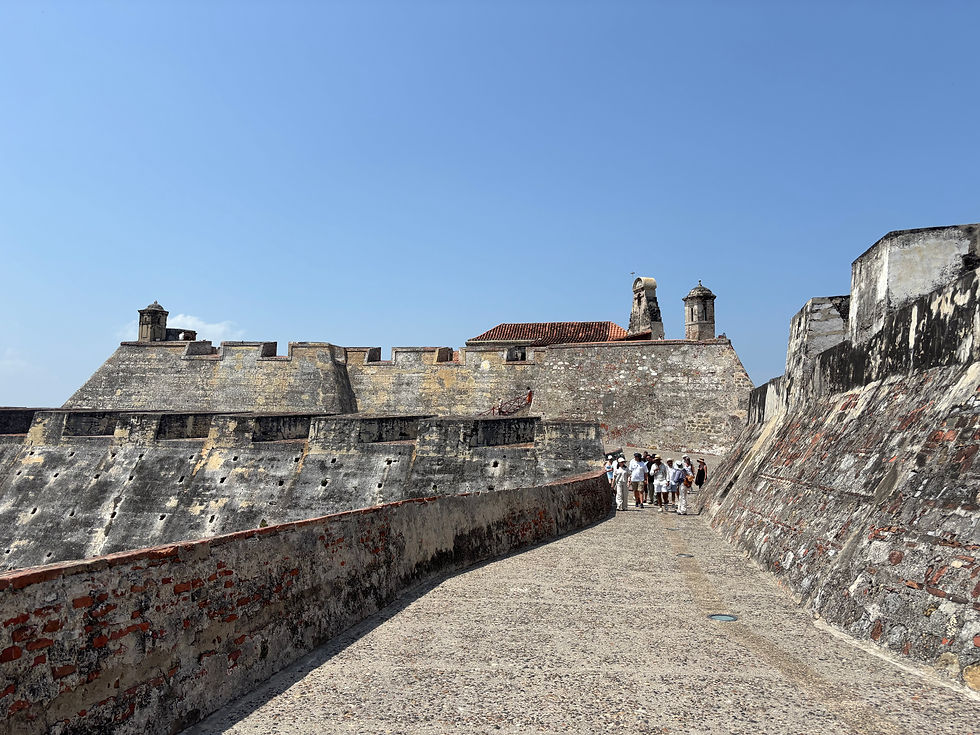
We started the morning at Castillo San Felipe, the largest fortress built by the Spanish in the Americas. Constructed to defend Cartagena from pirate attacks and foreign invasions, it is an impressive example of military engineering.
Walking through its tunnels and climbing to the top provides fantastic views over the city and helps you understand Cartagena's strategic importance during the colonial era.
We arrived at around 10 a.m., and it was already extremely hot. In hindsight, I would recommend visiting either early in the morning when it opens, around 7 a.m., or later in the afternoon, around 5 p.m., before closing.
Afterwards, we headed to Getsemaní, arguably Cartagena's most interesting neighbourhood. Colourful houses, vibrant murals, street art and lively squares create a fun and energetic atmosphere that feels very different from the more polished historic centre.
Make sure you also visit Plaza de la Trinidad. The entire neighbourhood is incredibly photogenic, and you will probably find yourself constantly stopping to take pictures.
For lunch, we headed to Pezetarian, a restaurant that combines Asian and Caribbean influences. We really enjoyed it.
In the afternoon, we relaxed by the pool before heading to the rooftop bar Apogeo for drinks. From there, we went for dinner at Restaurante Cande, which is on the more elegant and upscale side.




Day 8: Rosario Islands
On our second-to-last day, we booked a private boat trip to the Rosario Islands through our hotel.
While many visitors enjoy this excursion, it ended up being one of the weaker parts of the trip for us. The experience at the departure port felt quite chaotic, with large numbers of vendors and tour operators approaching visitors.
We were also surprised to discover that access to some of the more exclusive island beach clubs required additional fees, often payable in cash, as well as minimum spending requirements once on the island. This was something that had not been clearly explained to us beforehand.
The public islands were not particularly appealing to us either, as some areas felt crowded and less well maintained than we had expected.
The islands themselves are certainly pleasant, with clear water and beautiful Caribbean scenery. However, having visited many beach destinations around the world, we personally did not find them as spectacular as we had anticipated, especially given the overall cost of the excursion.
If we were planning the trip again, we would probably use the day to explore another destination such as Tayrona or Minca instead.


Day 9: Cartagena & Journey Home
Our final morning was spent enjoying one last walk through Cartagena before beginning the long journey home via Bogotá and Madrid.


What Would I Do Differently?
As mentioned earlier, if I were planning this trip again, I would probably structure it as follows:
2 nights in Eje Cafetero
3 nights in Medellín
2 nights in Cartagena
2 nights in Tayrona or Minca
Alternatively, if you only had 8 nights instead of 9, I would spend the final night in Bogotá before flying home.
Final Thoughts
Colombia was an enjoyable destination that offered a good mix of nature, culture, history and city life. The highlights of the trip for me were undoubtedly the Coffee Region, particularly Valle de Cocora and Filandia, as well as Medellín, which felt vibrant, modern and easy to explore.
Cartagena was visually stunning and offered some of the best food of the trip, although the intense heat and the constant attention from street vendors made it less enjoyable than I had expected.
Overall, this itinerary provides a solid introduction to some of Colombia's most famous highlights and serves as a good starting point for discovering the country.


Comments